
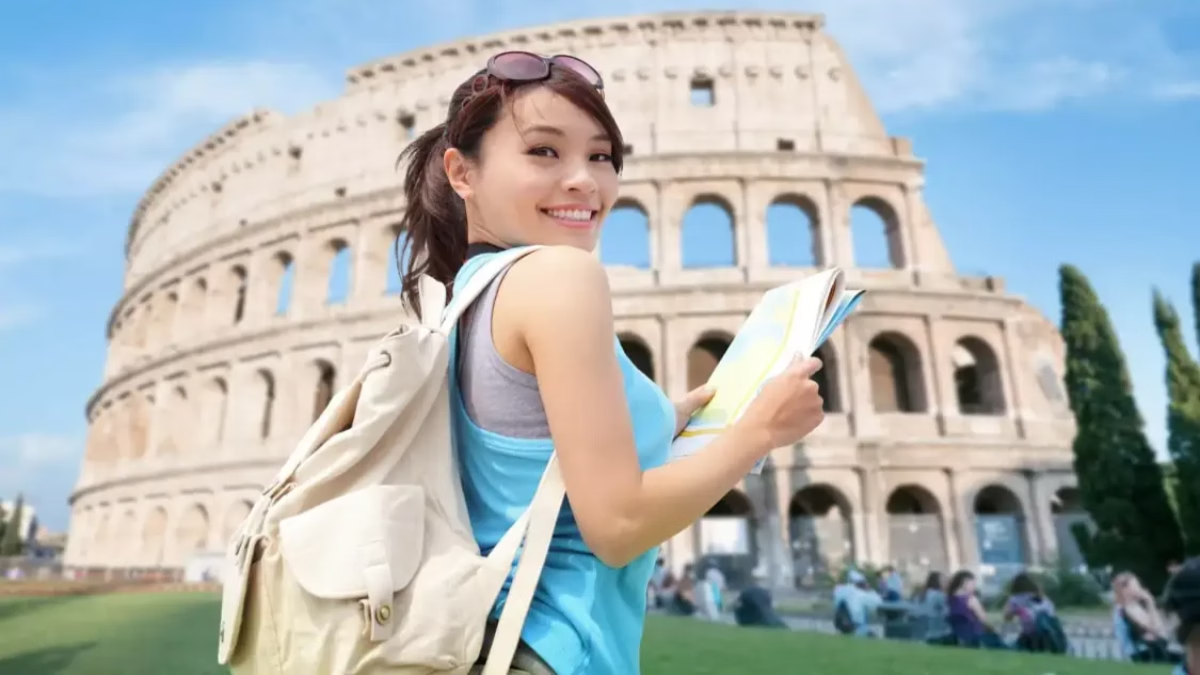
Colosseum Bag Rules & Security: What You Can and Can’t Bring

The Colosseum does not allow large bags, backpacks over approximately 30cm × 30cm, or any wheeled luggage inside. Oversized bags must be stored in paid lockers near the main entrance before joining the entry queue — adding 15–30 minutes during busy periods. All bags go through an X-ray security check. Water in a sealed bottle is permitted; open food and drinks are not.
One of the most common causes of unexpected delay at the Colosseum is arriving with a bag you cannot bring inside. Large backpacks are a very common sight — and a very common problem. Visitors with oversized bags must break off from the entry queue, find the locker facility, store their bag, and then rejoin the queue. In peak season this process adds 20–40 minutes to an already queued entry. This guide tells you exactly what you can bring, what you cannot, and how to navigate security as smoothly as possible.
Top Tickets
The General Entry ticket lets you explore at your own pace, while the Guided Tour adds an expert guide to the Colosseum, Roman Forum, and Palatine Hill. Want to stand on the arena floor? Go for the Guided Tour + Arena. For the full experience including the underground hypogeum, the Arena + Underground is the one to book.
Table of Contents
Bag Size Rules
The Colosseum’s official bag policy prohibits any bag, backpack, or luggage item that exceeds 30cm × 30cm in dimension. In practice, this means most standard backpacks (including day packs), wheeled luggage, and large shoulder bags must be stored before entry. Small crossbody bags, handbags, small day bags, and camera bags within the size limit are permitted through security.
The size limit is enforced at the security checkpoint before each entrance. Staff will ask you to put your bag through the X-ray machine, and if it is too large, you will be redirected to the locker storage facility before you can proceed.
| Bag Type | Permitted? | Notes |
| Small crossbody / handbag (under 30×30cm) | Yes | Goes through X-ray |
| Camera bag (under 30×30cm) | Yes | Goes through X-ray |
| Small day pack (under 30×30cm) | Yes | Goes through X-ray |
| Standard backpack (30cm+ on any side) | No | Must use paid lockers |
| Hiking / travel backpack | No | Must use paid lockers |
| Wheeled suitcase / trolley bag | No | Must use paid lockers |
| Large tote / shopping bag | Check | If over 30×30cm, must use lockers |
| Foldable tote / reusable bag (empty) | Yes | Fine if flat and compact |
The Locker Facility
Where Are the Lockers?
The paid luggage storage facility is located near the Sperone Valadier main entrance on the northeast side of the Colosseum. Look for the luggage storage signs when you arrive. There is also a storage option near the Roman Forum entrance for visitors who wish to explore the Forum area first.
How Much Do Lockers Cost?
Lockers cost approximately €1.50–€3 per bag depending on size, payable by card or cash. Prices are set by the facility operator and may vary. Payment is typically required upfront before storing.
How Long Does the Locker Process Take?
During off-peak periods (early morning, autumn/winter), the locker process typically takes 5–10 minutes. During peak season (June–August) at busy times, it can take 20–35 minutes including the queue for the lockers themselves. Factor this into your arrival time if you know you will need to use them.
Tips for the Locker Process
- Arrive earlier than planned: If you know you have a large bag, add 30 minutes to your expected arrival time
- Have payment ready: Card payment is usually accepted; have cash as a backup
- Keep your valuables with you: Take your ticket, phone, wallet, and ID out of your bag before storing it
- Note your locker number: Take a photo of the locker number so you can retrieve your bag easily after your visit
What Goes Through Security?
All bags and personal items go through an X-ray security machine before entering the Colosseum, similar to airport security. The process is generally quick — typically 3–5 minutes per person — but adds time to the overall entry process. Security applies at all three entrances.
What Security Is Looking For
Security checks are primarily looking for prohibited items (detailed below) and for any items that could damage or disturb the monument. The checks are thorough — do not attempt to bring prohibited items past security.
Prohibited Items
The following items are not permitted inside the Colosseum: large bags and backpacks (over 30×30cm), wheeled luggage, selfie sticks, standard tripods, drones, open food and drinks, glass bottles, sharp objects, and any items that could cause damage to the ancient monument.
- Large bags / backpacks over 30×30cm: Must be stored in paid lockers
- Wheeled luggage and suitcases: Not permitted — use left-luggage storage elsewhere in Rome
- Selfie sticks: Not permitted inside the monument
- Standard tripods: Generally not permitted. Mini tripods and gorilla pods are usually fine
- Drones: Strictly prohibited in and around the Colosseum and the surrounding archaeological area
- Open food and drinks: Not permitted inside. Water in a sealed bottle is permitted
- Glass bottles: Not permitted. Plastic water bottles are fine
- Sharp objects: Standard security rules apply — no knives, scissors over 6cm, etc.
- Umbrellas (large): Large golf umbrellas are not permitted. Compact folding umbrellas are fine
Permitted Items
- Water in a sealed plastic bottle: Essential in summer — up to 500ml recommended
- Small bags and handbags (under 30×30cm): Fine through security
- Camera bodies and lenses: Photography is permitted throughout the Colosseum
- Compact folding umbrella: Fine through security
- Baby items (nappies, formula, small snacks for infants): Permitted for families with infants
- Medication: Personal medication is permitted — carry it in your hand luggage, not in a stored bag
- Mobility aids: Wheelchairs, walking sticks, and mobility aids are permitted. See our accessibility guide for entrance details
How to Get Through Security Faster
1. Travel Light
The single most effective strategy. A small crossbody bag or compact day bag under the 30×30cm limit goes straight through security without any detour to the lockers. If you are not bringing much, leave the backpack at the hotel.
2. Use the Right Entrance
Different entrances have different queue times. The Stern Entrance (used for guided tours to the Underground, Arena, and Belvedere) has the shortest security queues — typically 10–15 minutes wait. The Sperone Valadier main entrance averages 45 minutes. If you have a guided tour ticket, use the Stern Entrance. See our guide to Colosseum entrances for which entrance to use for your ticket type.
3. Arrive Early
Security queues are shortest in the first hour after opening (8:30–9:30 am) and in the final hour before closing. Midday to 3 pm sees the longest combined ticket and security queues. See our guide to the best time to visit the Colosseum for full crowd and queue timing advice.
4. Pre-Download Your Ticket
Have your ticket on your phone’s home screen or downloaded offline before you reach the security point. Fumbling for emails in a queue adds time and stress. Screenshot the QR code for reliability.
5. Empty Pockets Before the X-ray
Remove your phone, keys, coins, belt, and anything metal before reaching the X-ray conveyor. This speeds up the process and reduces the chance of being asked to go through again.
What to Do If You Arrive with a Large Bag
- Do not join the main entrance queue with an oversized bag — you will be turned away at the security point and lose your place
- Follow signs to the luggage storage / locker facility near the Sperone Valadier entrance
- Store your bag, take your receipt and locker key, and note the locker number
- Retrieve your ticket, phone, wallet, and ID before storing
- Return to the entrance queue and proceed through security
- After your visit, retrieve your bag before leaving the area
If you are running close to your timed entry slot and need to store a bag, alert the entrance staff — they may be able to assist you or hold your slot briefly. With skip-the-line tickets, you generally have a 15-minute window either side of your booked time.
Luggage Storage Near the Colosseum
If you are visiting the Colosseum on your arrival or departure day and have full luggage, do not bring it to the Colosseum. Use Rome’s left-luggage storage services instead:
- Termini Station: Deposito Bagagli at Roma Termini — approximately €6 per bag per day, open early to late
- Near the Colosseum: Several private luggage storage services operate within a 5-minute walk of the Colosseum — search ‘luggage storage Colosseo’ to find current operators and prices
- Your hotel: Most hotels will store luggage before check-in and after check-out at no charge
Frequently Asked Questions
Can I bring a backpack into the Colosseum?
Small backpacks under 30cm × 30cm are permitted through security. Standard day packs, large backpacks, and hiking packs must be stored in paid lockers at the entrance. To avoid the delay, swap to a small crossbody bag or compact day bag.
Where are the Colosseum bag lockers?
The paid luggage storage facility is located near the Sperone Valadier main entrance on the northeast side of the Colosseum. Follow the luggage storage signs on arrival. There are also lockers near the Roman Forum entrance.
How much do the Colosseum lockers cost?
Lockers cost approximately €1.50–€3 per bag depending on size. Prices are set by the facility operator. Card payment is usually accepted; bring cash as a backup.
Can I bring a suitcase to the Colosseum?
No. Wheeled suitcases and trolley bags are not permitted inside the Colosseum or in the locker facility. If visiting on arrival or departure day, use left-luggage storage near Termini station or in the area near the Colosseum before visiting.
Can I bring my camera to the Colosseum?
Yes. Photography is permitted throughout the Colosseum including on tours. Camera bodies, lenses, and compact cameras all go through security without issues. Standard tripods are generally not permitted — a small gorillapod or tabletop tripod is usually fine.
Can I bring food and drink?
Water in a sealed plastic bottle is permitted. Open drinks, food, and glass bottles are not permitted inside the monument. There are drinking water fountains (nasoni) and cafés just outside the Colosseum.
How long does Colosseum security take?
Security itself takes approximately 3–5 minutes per person. The queue for security varies: the Stern Entrance (guided tours to restricted areas) typically has a 10–15 minute wait; the Sperone Valadier main entrance averages 45 minutes in peak season. Arriving early or with a guided tour ticket significantly reduces security wait time.
